
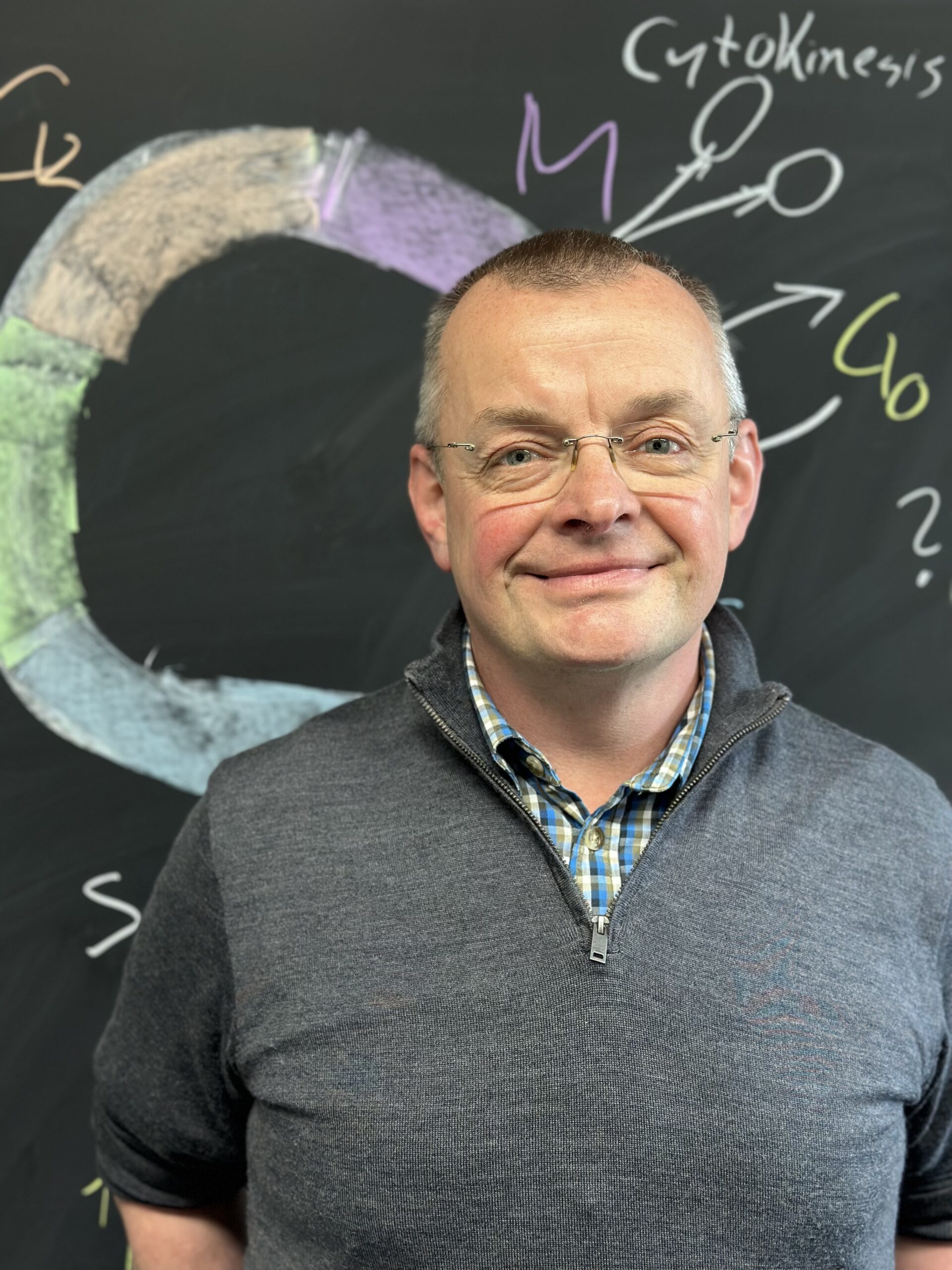
David Wishart

International Scientific Advisory Board

Professor David Wishart FRSC is a Distinguished University Professor at the University of Alberta, holding appointments in both the Departments of Biological Sciences and Computing Science.

His research interests are broad and include metabolomics, analytical chemistry, food chemistry, natural product chemistry, molecular biology, protein chemistry and neuroscience. Professor Wishart has developed several widely used techniques using NMR spectroscopy, mass spectrometry, liquid chromatography and gas chromatography to characterize the structures of both large and small molecules, and the use of AI/ML to identify unknown metabolites and metabolic pathways. Professor Wishart is a Fellow of the Royal Society of Canada, was born and raised in Edmonton and identifies as Metis. He formerly served as Chair for Metabolomics Australia ISAB.


Olga Troyanskaya

International Scientific Advisory Board

Professor Olga Troyanskaya is the Maduraperuma/Khot Professor of Computer Science and Genomics at Princeton University, where she is also the founding Director of Princeton Precision Health, an interdisciplinary initiative harnessing AI to transform our understanding of human health and disease.

She is also Deputy Director for Genomics at the Flatiron Institute of the Simons Foundation and has been recognized as one of MIT Technology Review’s top young innovators. Professor Troyanskaya’s research develops AI and data-driven methods to decode the human genome, uncover disease mechanisms, and enable precision medicine — with a particular focus on integrative modeling of genomic, multi-omic and clinical data. Her work spans applications from autism and cancer to kidney disease. Her honors include the Sloan Research Fellowship, NSF CAREER Award, Overton Prize from the International Society for Computational Biology, and the Ira Herskowitz Award from the Genetics Society of America.


Pamela Silver

International Scientific Advisory Board

Professor Pamela Silver is one of the founding members of the Department of Systems Biology at Harvard Medical School and is the Elliot T and Onie H Adams Professor of Biochemistry and Systems Biology.

Her lab is building synthetic cells that act as sensors, memory devices, bio-computers, producers of high value commodities and energy from the sun, and novel subsystems such as proteins with designed properties for therapeutic use. Among her most recent innovations are bacteria that can sense and respond to gut inflammation and the Bionic Leaf, which couples sunlight capture to bioproduction at an efficiency exceeding plants. Understanding how to program cells in a rational way will have value in stem cell design, drug therapy and the environment. Professor Silver is a member of the US National Academy of Sciences and was the first Director of the Harvard University Graduate Program.


Brenda Andrews

International Scientific Advisory Board

Professor Brenda Andrews is University Professor and Canada Research Chair in Systems Genetics and Cell Biology in the Donnelly Centre for Cellular and Biomolecular Research and the Department of Molecular Genetics at the University of Toronto.

Her lab has been at the forefront of research aimed at understanding cellular signalling processes and genetic networks in yeast using functional genomics, high content screening and gene expression tools. Her lab created the first complete genetic interaction map for a model eukaryotic cell.

Current work is linking genotype to phenotype by combining genetics and high content screening to assess changes in protein localization and abundance under a variety of genetic, environmental and chemical stresses using rapid image acquisition and analysis. Professor Andrews is a Companion of the Order of Canada, a Fellow of the Royal Society of Canada, a Fellow of the American Academy of Microbiology, and an International Member of the US National Academy of Sciences.


Hugh Possingham

International Scientific Advisory Board

Chair, International Scientific Advisory Board

Professor Hugh Possingham FAA FNAS FRS is a Vice-Chancellor’s Senior Research Fellow at the University of Queensland’s Centre for Biodiversity and Conservation Science and is actively involved in conservation policy and advocacy.

He was previously a Professor of Mathematics, Zoology and held ARC Professorial, Laureate and Federation Fellowships in the Department of Mathematics and the School of the Environment. His has championed the application of operations research to conservation biology globally, including co-developing the spatial planning tool Marxan. Possingham was the Queensland Chief Scientist from 2020 to 2022, where he provided high-level strategic research and innovation advice to the Queensland Government and acted as an ambassador for science in Queensland. He is a foreign associate of the USA National Academy of Sciences and a Fellow of the Royal Society. Hugh likes counting birds.


Jennifer Flegg

International Scientific Advisory Board

Director

Professor Jennifer Flegg is an applied mathematician in the School of Mathematics and Statistics at the University of Melbourne. Professor Flegg is an established international academic leader in mathematical biology with a focus on developing mathematical models of biological phenomena and calibrating them to data.

Professor Flegg’s research focuses on using mathematics and statistics to answer questions in biology and medicine, with a particular emphasis on mathematical models in areas such as wound healing, tumour growth and infectious disease epidemiology.

Professor Flegg has an extensive publication record in peer-reviewed journals and has been awarded several prestigious honours for her work, including the JH Michell Medal in 2020 for excellence in research by ANZIAM (Australian and New Zealand Industrial and Applied Mathematics), the Christopher Heyde Medal in 2020 from the Australian Academy of Science and the Society for Mathematical Biology Leah Edelstein-Keshet Prize in 2021. She also serves as an Editorial Board member for PLOS Computational Biology, eLife, Bulletin of Mathematical Biology and SIAM Journal on Applied Mathematics.


ARC Centre of Excellence for the Mathematical Analysis of Cellular Systems (MACSYS)

  • The University of Melbourne Victoria 3010 Australia
  • +61 3 8344 9188

© ARC Centre of Excellence for the Mathematical Analysis of Cellular Systems


The ARC Centre of Excellence for the Mathematical Analysis of Cellular Systems (MACSYS) acknowledges First Nations peoples as the first scientists, makers and innovators of this land and their continuing connection to Country. We pay our respects to all Aboriginal and Torres Strait Islander Peoples culture and to Elders past and present.

We pride ourselves in our commitment to foster and promote a diverse, safe and respectful environment free from discrimination, harassment, or victimisation based on individual identity and experience.

Privacy Preference Center