

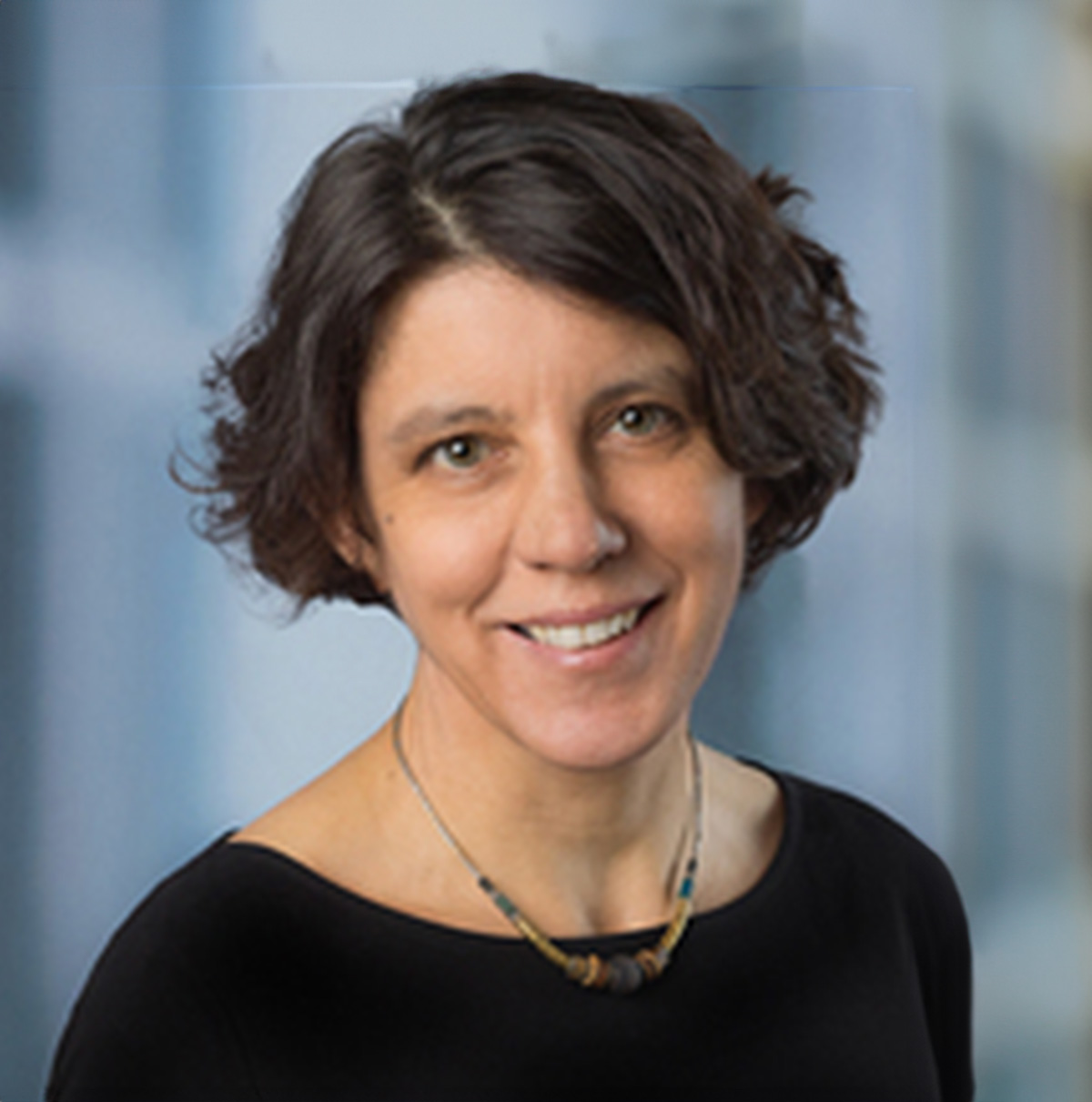
Andrea Loettgers

Associate Investigators
Associate Investigator
Andrea Loettgers is a senior researcher in the ERC project Possible Life-The Philosophical Significance of Extending Biology at the University in Vienna. She holds a habilitation in philosophy of science from the University of Bern and a PhD in physics from the University of Göttingen.
From 2001 to 2011 she has been a Postdoc at the California Institute of Technology. At Caltech she held joint appointments in the humanities and the biology department to conduct and philosophical analyse laboratory observations in synthetic biology. During this time, she had been awarded with a grant from the Swiss National Science Foundation and the Alfred Sloan Foundation. From 2005-2006 she had been appointed as the Hixon-Riggs Visiting Professor for Science, Technology and Social Studies at Harvey Mudd College. After returning to Switzerland Loettgers has been awarded by an additional grant from the Swiss National Science Foundation for a project on synthetic biology at the University of Geneva. From 2016 to 2018 she was appointed as Bernoulli Fellow at the Center of Space and Habitability.
In her research Loettgers investigates modeling practices in physics and biology based on laboratory observations. A special interest concerns the development of organizational principles in biology and their transfer in-between biology and physics. She has published in: British Journal for the Philosophy of Science, Philosophy of Science, European Journal for Philosophy of Science, Studies in History and Philosophy of Science, Studies in History and Philosophy of Biological and Biomedical Sciences, and The Monist.


Tarja Knuuttila

Associate Investigators
Associate Investigator
Professor Tarja Knuuttila’s research concerns the epistemology of scientific modelling, the relation of scientific models to the real world, and the connection between simplicity and generality of models, with varied fields of application including ecology, economics, and engineering.
She has developed a particular interest in the relevance of mathematical in complex scenarios, including biology, but also the economy. She is the principal investigator of the Possible Life project of the European Research Council, which studies the philosophy of hypothetical types of biochemistry including synthetic biology and astrobiology. In 2021 she was elected to the Academia Europaea.

Markus Covert

Associate Investigators
Associate Investigator
Dr. Markus Covert is currently the Ram Shriram Chair and Professor of Bioengineering at Stanford University with a background in whole-cell modelling.
In 2012 Professor Covert published the first whole cell model, for the small bacterium, Mycoplasma genitalium, in the Journal Cell. This model combined flux-modelling of the metabolism with differential equation and stochastic models to describe physiological and gene regulatory networks and processes. Prof Covert and his group have continued to work on whole-cell models: in 2020, his group published an expansive model of Escherichia coli.

David Ascher

Associate Investigators
Associate Investigator
Professor David Ascher is an expert in structural bioinformatics and the application of artificial intelligence to biological and clinical data. He is currently an NHMRC Investigator and Director of Biotechnology at the University of Queensland. He is also Head of Computational Biology and Clinical Informatics at the Baker Institute.
David’s research focus is in modelling biological data to gain insight into fundamental biological processes. One of his primary research interests has been developing tools to unravel the link between genotype and phenotype, using computational and experimental approaches to understand the effects of mutations on protein structure and function, and how these effects propagate across biological networks. His group has developed a platform of over 60 widely used programs for assessing the molecular consequences of coding variants (over 8 million hits/year). These tools have been successfully translated into both clinical and industrial use in genetic diseases, drug resistance, and drug development.